Featured Project
AI-Powered Bird Detector & Repellent System
An IoT-based system that detects birds and repels them using AI-powered object detection and automated speaker activation.
AI & Embedded System Engineer
6 months
4 developers
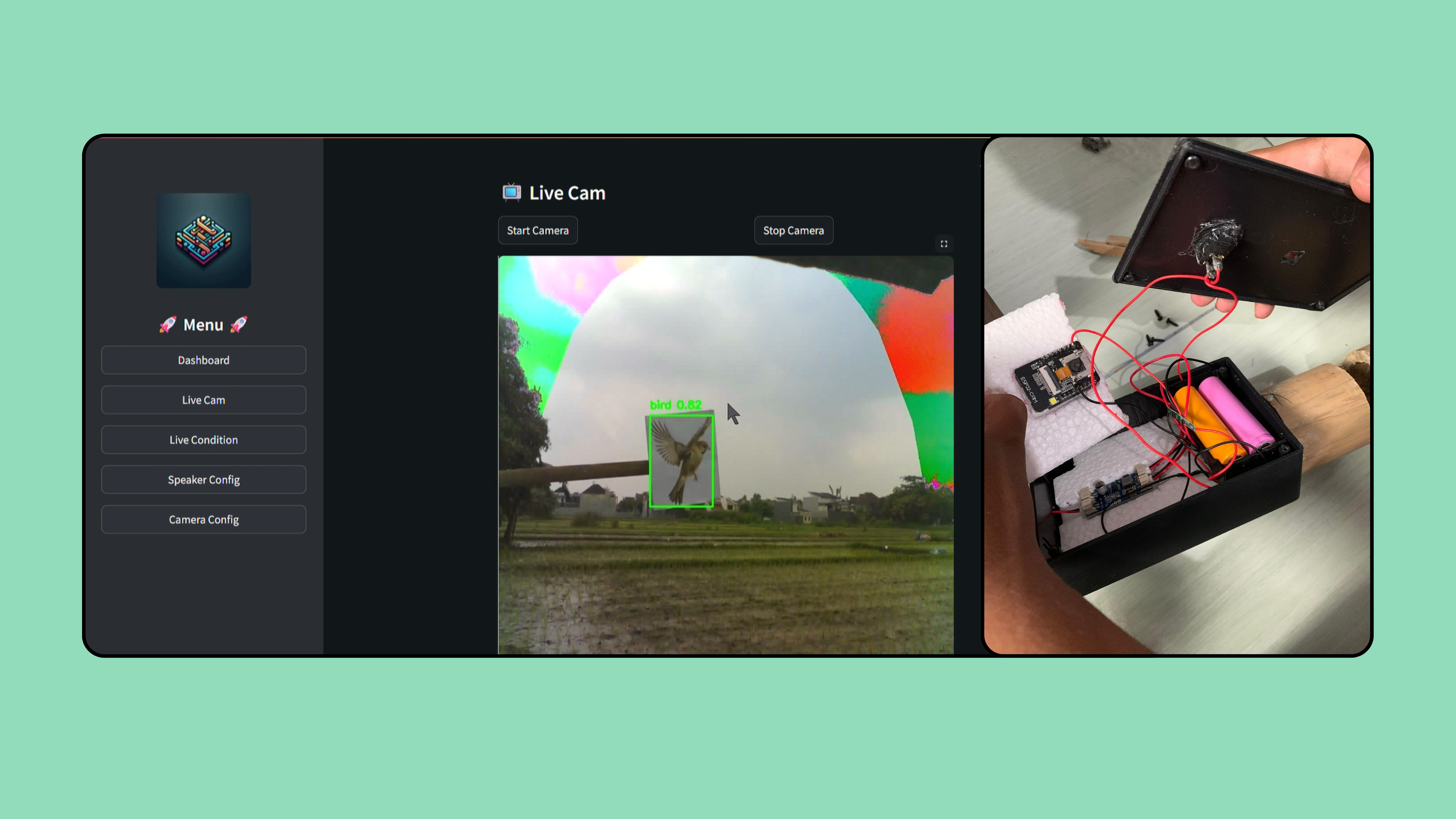
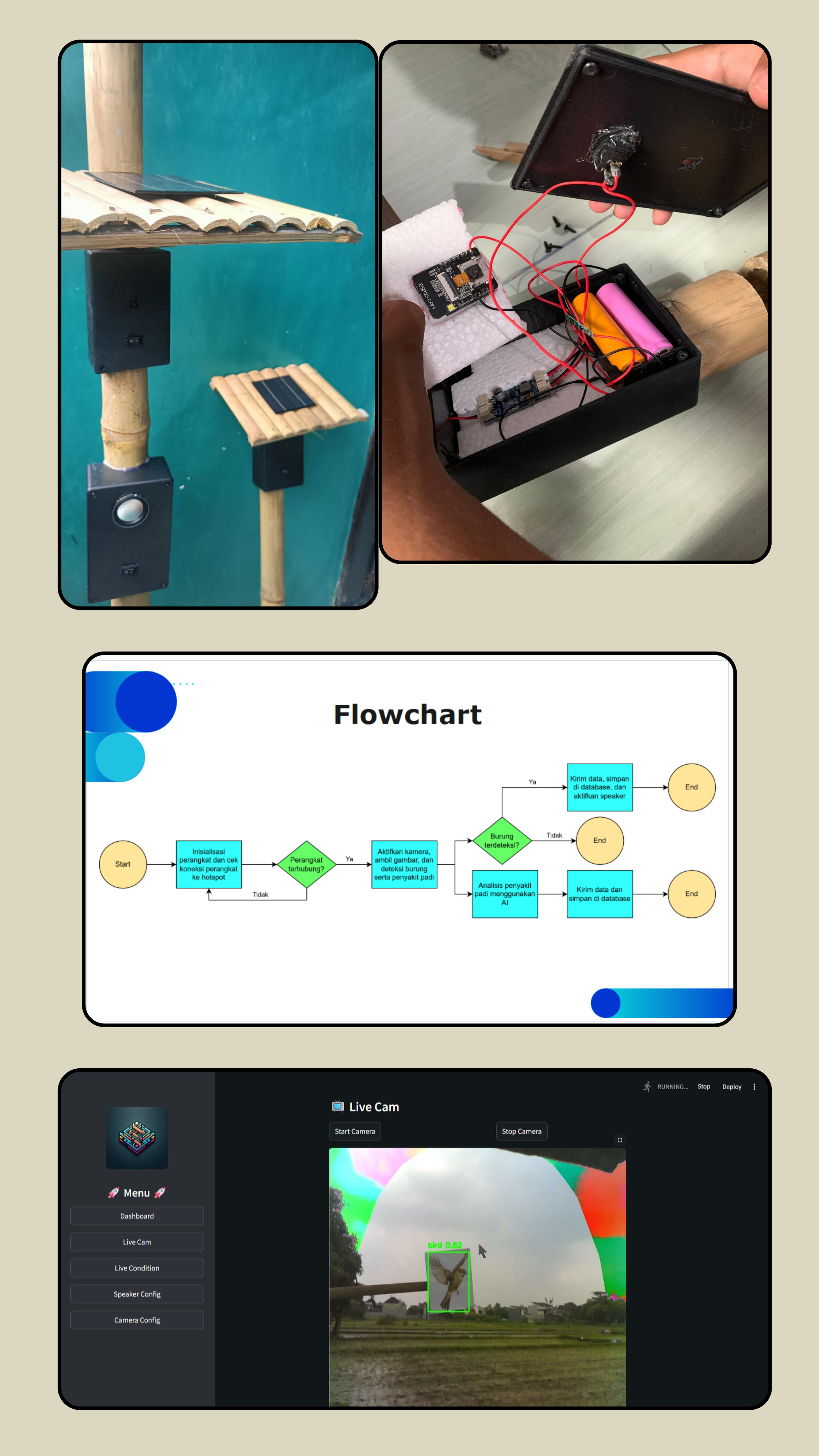
ESP32-CAM Streamlit YOLOv5 Flask Solar Panel Python
Architecture Diagram
graph LR
A[ESP32-CAM Solar] --> B[Flask API Server]
B --> C[YOLOv5 Detection]
B --> D[Streamlit Dashboard]
C --> E[Speaker Trigger]
A smart agricultural IoT system designed to automatically detect birds in rice fields and trigger a speaker to scare them away.
Problem
Petani kehilangan hingga 30% hasil panen karena burung yang memakan padi. Solusi manual seperti orang-orangan sawah tidak efektif dan membutuhkan pengawasan terus-menerus.
Solution
Membangun IoT system dengan AI detection yang otomatis mengaktifkan speaker pengusir saat burung terdeteksi, mengurangi kebutuhan pengawasan manual dan meningkatkan efektivitas perlindungan panen.
Architecture Decisions
- Chose ESP32-CAM over Raspberry Pi for cost efficiency ($10 vs $50) and lower power consumption — critical for solar-powered deployment
- Used YOLOv5 for detection because of optimal balance between accuracy (85%+) and inference speed (~100ms)
- Chose Flask + Streamlit for rapid prototyping — needed working dashboard in 2 weeks, not production-grade infrastructure
- Offloaded AI inference to server instead of edge due to ESP32 memory limitations
Trade-offs
- Limited camera resolution (640x480) for bandwidth efficiency on rural networks
- Detection delay ~2 seconds is acceptable — birds don’t fly away instantly
- Simple threshold-based speaker trigger vs complex behavioral patterns — simpler = more reliable
Lessons Learned
- Start with minimal viable IoT setup, add complexity only when needed
- Power consumption is the #1 constraint for solar-powered devices
- Field testing is mandatory — lab conditions are nothing like real rice fields
Features
- Real-time bird detection with YOLOv5
- Speaker activation on detection
- Solar-powered ESP32-CAM device
- Web-based dashboard to monitor live camera feed
- Configurable speaker and camera settings
- Rice disease analysis from uploaded images
- Automatic image capture and logging
Challenges Overcome
- Deploying custom AI models on limited IoT hardware
- Maintaining stable ESP32-CAM live stream to dashboard
- Synchronizing detection events with hardware output (speaker)
- Designing a power-efficient system with solar charging
- Building responsive dashboard UI using Streamlit