Home / Projects / Smart Rice Guard - AI Bird Detector
Smart Rice Guard - AI Bird Detector
Top 10 national Samsung Innovation Campus IoT system that detects birds in rice fields with ESP32-CAM, YOLO AI, Ubidots, and automated speaker response.
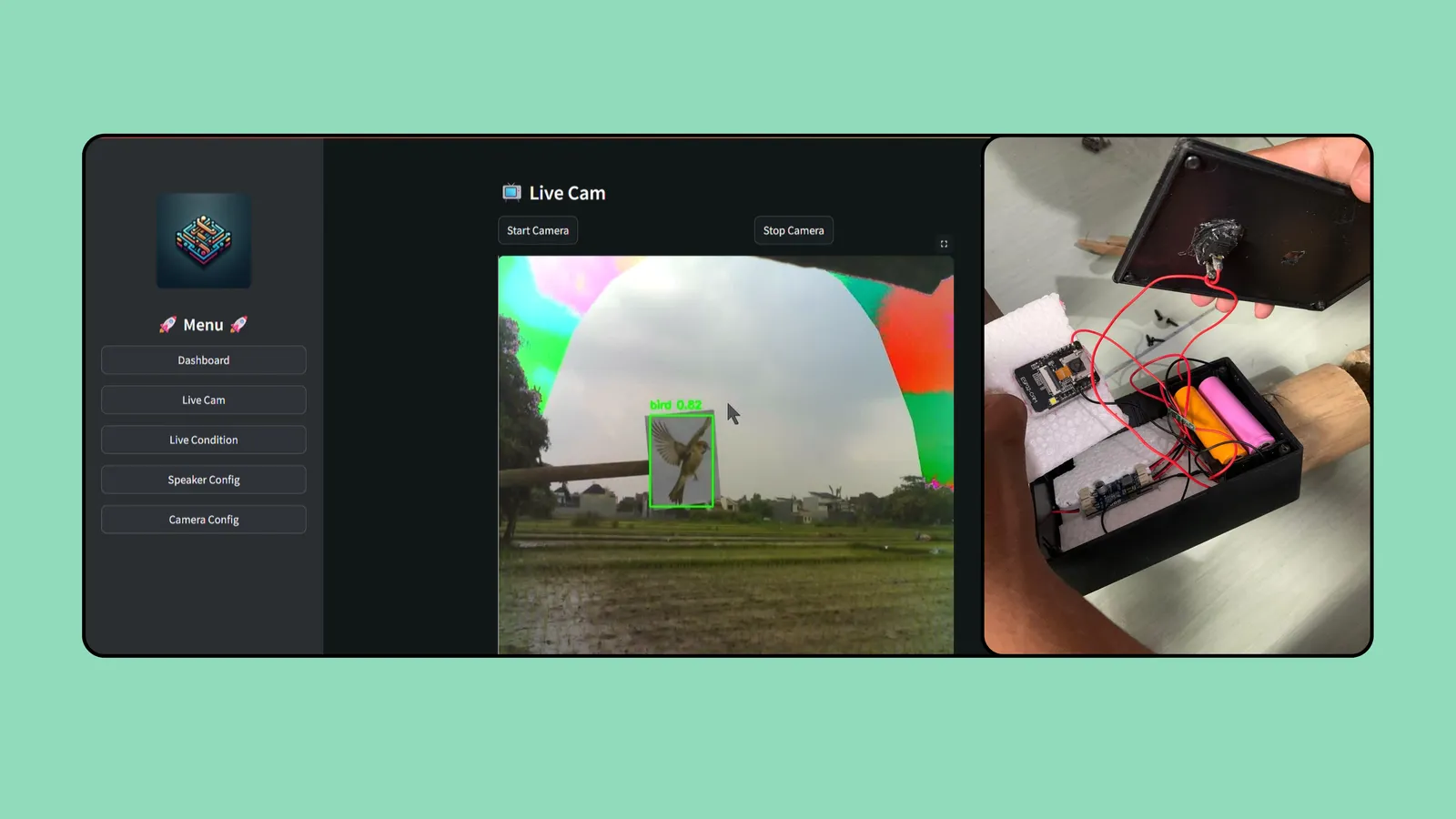
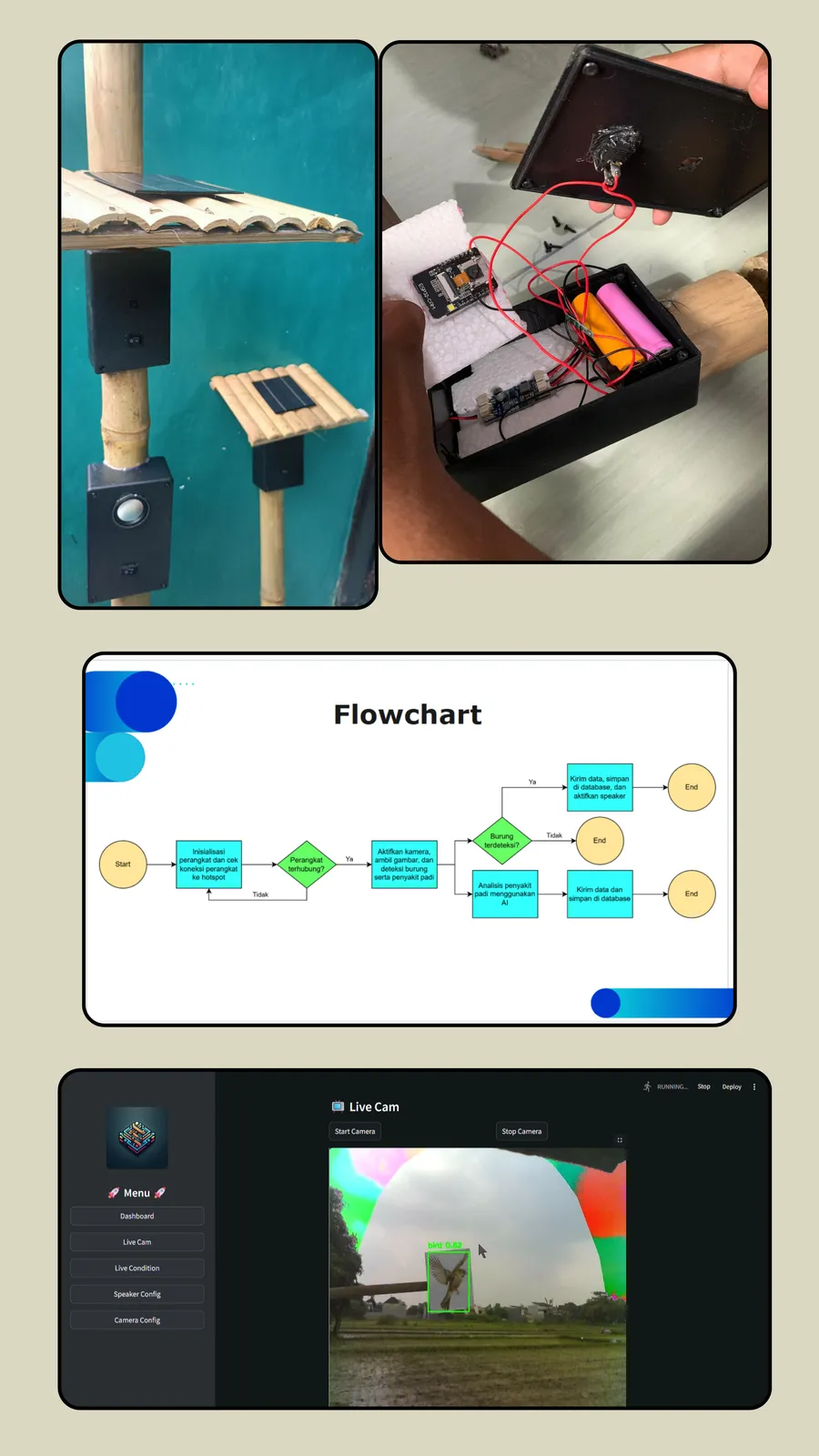
Tech Stack
ESP32-CAM · YOLO · Ubidots · Flask · Streamlit · Python
Architecture Diagram
Click a node for the decision behind it
- A ESP32-CAM
- ESP32-CAM as the field camera module, chosen for direct image capture in the rice field itself rather than a fixed installation.
- B Flask API Server
- A Flask server sits between the device and everything else, so detection and dashboards can change without reflashing the camera.
- C YOLO Detection
- YOLO-based detection identifies birds from the camera input.
- D Ubidots Dashboard
- Monitoring is wired to Ubidots so the prototype has a dashboard layer, not just device output nobody can see.
- E Speaker Trigger
- The speaker trigger flow is deliberately simple, so a detection becomes an immediate response in the field instead of a queued job.
Smart Rice Guard is an agricultural IoT system from Samsung Innovation Campus 2024/2025. It detects birds in rice fields with ESP32-CAM and YOLO-based AI, then triggers an automated speaker response through a dashboard-connected flow.
Problem
Farmland needed a more responsive way to detect birds on the plot. Manual approaches — watching directly, or static deterrents — fall short when the response has to happen immediately in the field.
Solution
Built an IoT system with an ESP32-CAM, YOLO detection, an Ubidots dashboard, and an automatic speaker, so a detection turns straight into action in the field.
Architecture Decisions
- Used ESP32-CAM as the field camera module for direct image capture in the rice field context
- Used YOLO-based detection to identify birds from camera input
- Connected monitoring to Ubidots so the prototype had a dashboard layer, not just device output
- Kept the speaker trigger flow simple so detection could become an immediate field response
Trade-offs
- Limited camera resolution (640x480) for bandwidth efficiency on rural networks
- Server-side inference was easier to iterate than forcing the AI model onto constrained hardware
- Simple speaker activation was prioritized over complex behavioral patterns
Lessons Learned
- Start with minimal viable IoT setup, add complexity only when needed
- Field testing is mandatory — lab conditions are nothing like real rice fields
Features
- Real-time bird detection with YOLO
- Speaker activation on detection
- ESP32-CAM field device
- Ubidots dashboard integration
- Configurable speaker and camera settings
- Rice disease analysis from uploaded images
- Automatic image capture and logging
Achievement
- Top 10 National, University Category, Samsung Innovation Campus 2024/2025
Challenges Overcome
- Deploying custom AI models on limited IoT hardware
- Maintaining stable ESP32-CAM live stream to dashboard
- Synchronizing detection events with hardware output (speaker)
- Building responsive dashboard UI using Streamlit