Home / Projects / Tumbas Point of Sale
Featured Project
Tumbas Point of Sale
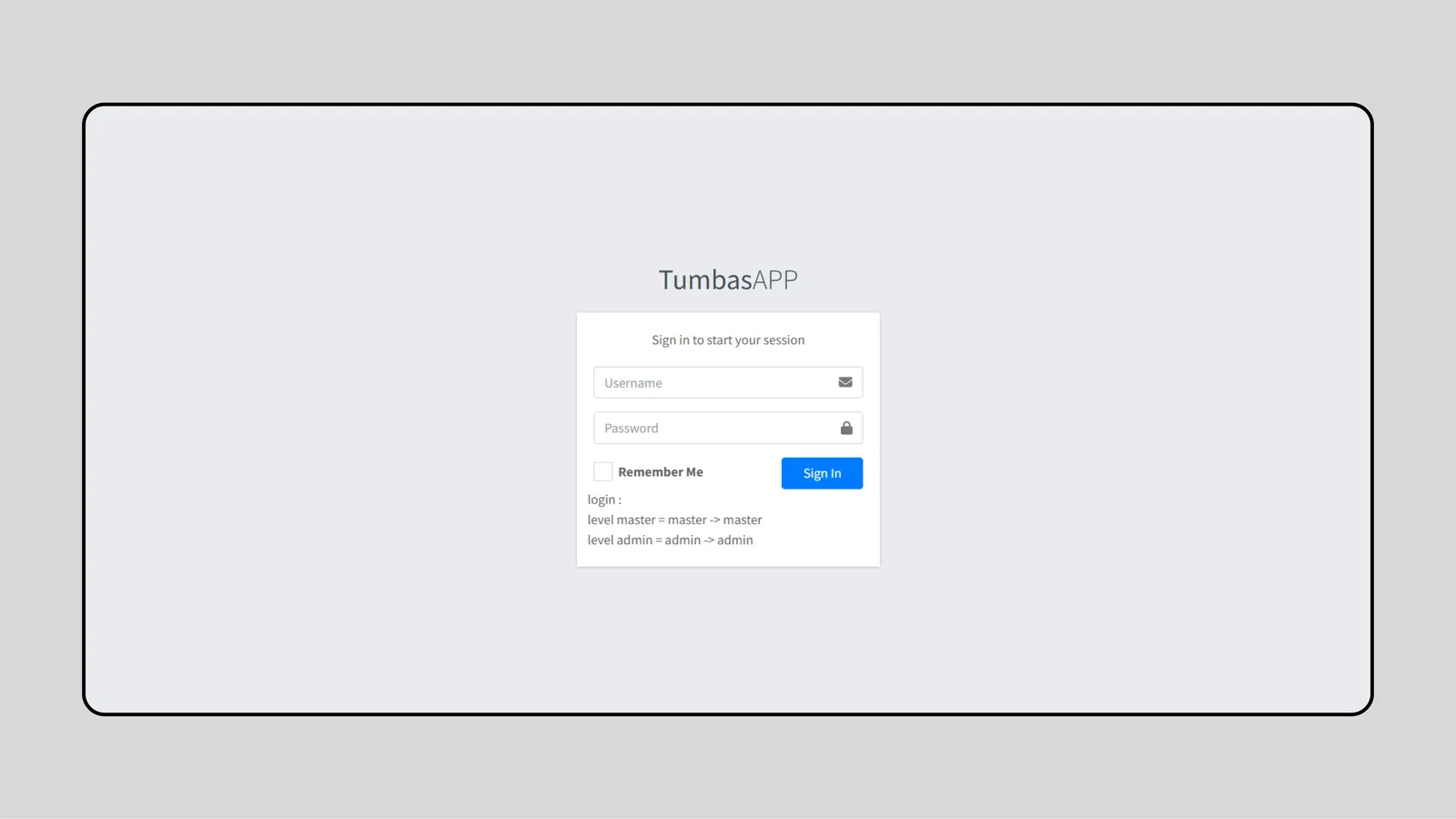
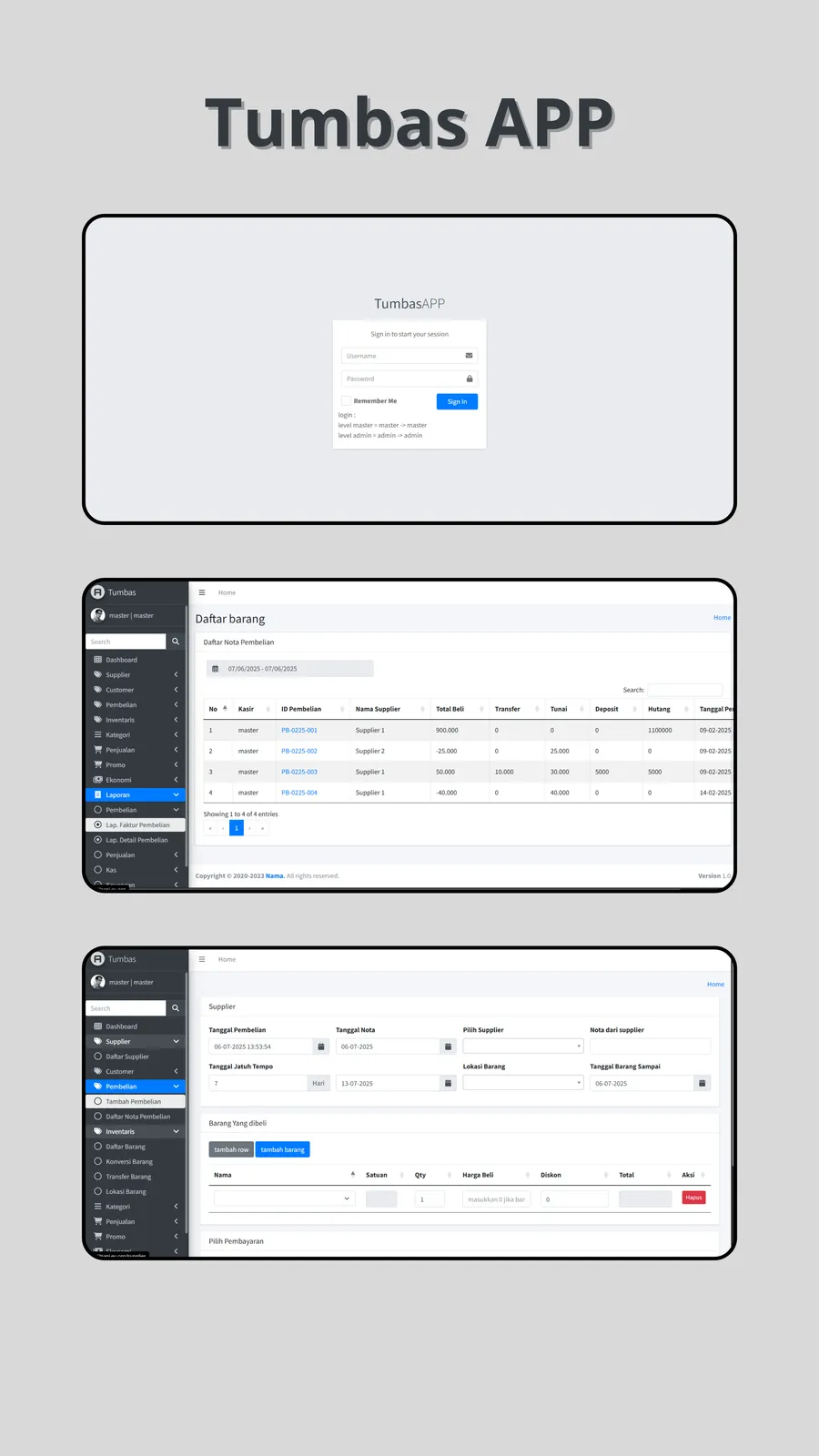
Laravel Point of Sale application built to production-ready stage for cashier and transaction management, delivered with a 3-person team and VPS deployment.
Tech Stack
Laravel · MySQL · Bootstrap · JQuery · AdminLTE
Architecture Diagram
Click a node for the decision behind it
- A Cashier Browser
- Server-rendered pages instead of an SPA — simpler to deploy, and more reliable on the slow connections a shop actually runs on.
- B Laravel Backend
- Laravel and MySQL were chosen for delivery speed and team familiarity, which cut the learning curve without giving up reliability.
- C MySQL Database
- Stock updates go through a queue so concurrent transactions cannot race each other into a wrong count.
- D Reports Dashboard
- Reporting reads the same records the cashier writes, so profit-and-loss, payables, and receivables stop drifting from reality.
A Laravel-based Point of Sale application built to production-ready stage for cashier and transaction management. I led a 3-person team covering design, backend, and frontend, then handled VPS deployment, server optimization, and automated backup.
Problem
Grocery stores managed inventory, suppliers, and customers by hand. Profit-and-loss, payables, and receivables were recorded inconsistently, which turned into real financial loss.
Solution
Built a web-based Laravel POS for cashier work and transaction management, with attention to the operational flow, data handling, VPS deployment, and system backup.
Architecture Decisions
- Chose Laravel + MySQL for rapid development and team familiarity — reducing learning curve while maintaining reliability
- Implemented queue-based stock updates to handle concurrent transactions without race conditions
- Server-rendered pages instead of SPA for simpler deployment and better reliability on slow connections
Trade-offs
- Prioritized reliability over cutting-edge tech stack — the business needed stability, not innovation
- Accepted longer initial dashboard load for complete data accuracy
- Chose synchronous stock validation over optimistic updates to prevent overselling
Lessons Learned
- Error handling upfront saves hours of debugging in production
- Deployment and backup planning matter as much as feature work for business-critical cashier systems
- Always test with realistic data volumes, not just sample data
Features
- Product and stock management
- Daily sales with barcode scanning
- Multi-user access with roles
- Sales and debt reports
- Customer and supplier tracking
- Return & discount handling
- Multi-outlet and offline support
- Real-time sales dashboard
CV Highlights
- Built to production-ready stage
- Led a 3-person team covering design, backend, and frontend
- Managed VPS deployment, server optimization, and automated system backup
Challenges Overcome
- Real-time stock updates during transactions
- Optimizing performance for large data
- Designing fast and intuitive cashier UI
- Secure role-based access control
- Integrating POS hardware (scanner, printer)